
NEWS / BLOGS
Microfibers in the Ocean

Microfibers in the Ocean, by Julia Hill
From single-use water bottles to microbeads from our facial cleansers, plastics find their way into our waters through a variety of means. One plastic pollutant that is lesser known, but gaining more and more awareness is microfibers. These tiny strands of plastic are found in synthetic fabrics such as polyester and rayon and, while synthetics were formerly reserved solely for high performance athletic gear, they now make up more than 60% of all clothing manufactured. With more and more everyday clothing containing these plastic fibers it’s no wonder that an estimated 1.7 million tons of microfibers are released into the ocean each year. Current studies show that microfibers are now the single largest contributor to watershed plastic pollution and one of the most prevalent forms of plastic pollution in our oceans.
How microfibers reach our oceans
When synthetic clothing such as fleeces or yoga pants is washed, microfibers are released from the fabric and rinsed away with the washing water. They then make their way to water treatment centers where, due to their small size, a majority escape through the cleansing process and are released directly back into our waterways. Those that are captured in treatment centers become part of a muddy mass that is applied to fields as fertilizer. Carried by rivers, rain, and flood, these microfibers then end up in our oceans where they’re further dispersed by tides and currents or settle on the ocean floor.

© The Story of Stuff
Impacts on ecosystems
Once in the ocean, microfibers act as sponges, soaking up and transporting pollutants such as pesticides, industrial chemicals, and oil. These toxic fibers, whether found on the ocean floor or floating in the water column, are often ingested by ocean creatures such as clams, mussels, and fish causing negative health effects like liver toxicity. With these microfibers rapidly making their way through the oceanic food chain, plastic- and toxin-ridden fish regularly end up on our dinner plates.
What is currently being done and how we can help
The simplest ways to prevent microfiber pollution at home are to purchase clothing made from natural products such as wool or cotton and high quality synthetics that last longer and require less frequent washing. When washing your synthetics, use specialized garment bags and machine filters that catch microfibers and prevent them from entering our water supply. Companies like Patagonia are leading the way by researching ways to construct more durable synthetic fabrics and providing customers with fabric care instructions. As with any other plastic pollution, it is important for individuals to be more mindful of the products they purchase and how they impact our shared environment.
Microbeads in the Ocean
Microbeads in the Ocean, by Julia Hill

The use of plastics is so prevalent in today’s society that the simple act of washing your face can have negative impacts for the environment. The fault, in this instance, lies with microbeads, small spherical pieces of plastic made for exfoliating body scrubs, face washes, and toothpastes. Since being introduced to the market in the 1970s, these bath products now have a global impact and are manufactured by the world’s largest companies such as Revlon and Estée Lauder. Though these plastic beads commonly measure only a millimeter in diameter, their impact is large with microbeads being found in vast numbers across the world’s fresh and salt-water environments.
How microbeads reach our oceans
It all starts with a bathroom drain. Once microbeads are washed down sinks and showers, they are carried to water treatment centers where they make their way through the treatment process and are carried back into the water supply. When heavy rains or sewage overflows occur, these concentrations of microbeads are carried to larger bodies of water such as the Great Lakes, Mississippi River, and ocean. After reaching the ocean, they may concentrate around coastal areas or be carried further to sea by tides and currents.


Impacts on ecosystems
Studies have shown that once microbeads reach a large body of water, they make their way rapidly up the food chain. Plankton ingest the beads, plankton are then eaten by fish, those same fish are eaten by larger fish, and on and on it goes until those fish, and all the pollutants that come with them, reach our dinner plates. Over time, as exposed to UV rays, the beads degrade causing them to absorb more pollutants and thus become more toxic. The negative effects of these toxins are felt by all creatures that ingest them and have been linked to birth defects and cancer in humans.
What is currently being done and how we can help
In 2015, the United States Congress banned microbeads from consumer products demanding that they no longer be in production after July 2017. And while this is a great win for the environment, not all countries have enacted such restrictions. It is important to be a mindful consumer and not purchase products that contain these materials. If the product is listed as “exfoliating” or “scrubbing” be sure to check if the ingredients list includes things such as Polyethylene, Polypropylene, Polyethylene terephthalate, Polymethyl methacrylate or Nylon. If these ingredients are present, then so are microbeads.
Plastics in the Ocean

© Ocean Conservancy
Plastics in the Ocean, by julia hill
Starting in the 1970s, use of plastics worldwide has increased exponentially and as our use of these products has grown so too has the need to deal with the subsequent waste. Single-use disposable plastics are the main culprits in this widespread issue. From the straws we use in our drinks to the wrapping on items at the grocery, these products are a common part of modern society and so the plastic waste builds. Whether carried downstream through our rivers or dumped directly in the ocean from vessels, billions of pounds of plastic are added to the world’s oceans each year. And though our oceans are vast, the addition of this many plastics is having a detrimental effect on the environment and all life that depends upon it.
How plastics get into oceans
The most common way plastics are carried to the oceans is through rivers. A recent study published in Environmental Science & Technology found that much of the world’s plastic marine waste can be traced to 10 major rivers in developing countries throughout Africa and Asia. Waste management is a key consideration as under-developed and overloaded sewer and disposal systems bring plastics into waterways. Once carried downstream and introduced to the marine environment, plastic items can be spread vast distances by wind and currents where they may collect in large rubbish heaps or disperse throughout the water table.

© Monterey Bay Aquarium
Impacts on ecosystems
There are several ways that plastics have a negative impact on marine ecosystems. Ingestion of plastics exposes marine animals to toxic chemicals that can lead to stomach and liver abnormalities. Equally sinister are the gut blockages that cause internal damage and even death. Larger plastic waste causes entanglements that lead to a slow death for marine animals such as whales, sea lions, and sharks. Unfortunately, once plastics reach the ocean, they become a permanent fixture of the marine environment as they do not quickly degrade and are not easily retrieved.
How we can help
Though widespread, it is possible to lessen the introduction and negative effects of plastics in the ocean. If more care is taken with waste management, especially near waterways, and single-use plastics are used more sparingly and recycled when possible, then the impact of plastics on our oceans can decrease considerably. Organizations like The Plastic Bank are using innovative solutions to address these issues and enact positive change at local, national, and global levels. There are also ways that we as individuals can make a difference whether by participating in beach cleanups or being more mindful about waste disposal in our communities. Starting on the ground, we can work to ensure these plastics never have a chance to reach our oceans in the first place.
Climate Change Indicators: Oceans
Covering about 70 percent of the Earth’s surface, the world’s oceans have a two-way relationship with weather and climate. The oceans influence the weather on local to global scales, while changes in climate can fundamentally alter many properties of the oceans. This chapter examines how some of these important characteristics of the oceans have changed over time.
Read the full article at source: https://www.epa.gov/climate-indicators/oceans

Most Ocean Plastic Pollution Carried by 10 Rivers
LONDON —
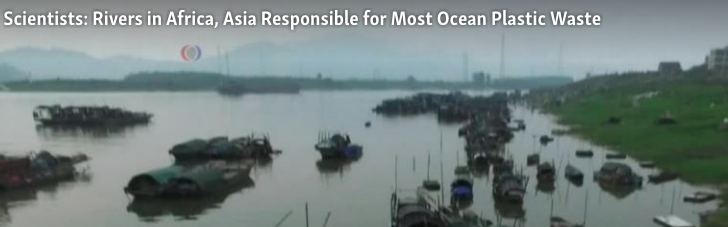
The equivalent of one garbage truck full of plastic waste is dumped into the world’s oceans every minute, equal to 8 million tons a year. New research suggests that 90 percent of that waste gets into the oceans through 10 major river systems.
“It seems that larger rivers preferentially transport plastic and these are rivers with a large population. You could reduce river plastic loads tremendously by focusing on these 10 rivers,” lead researcher Christian Schmidt of Germany’s Helmholtz Center for Environmental Research, told VOA.
Two of the rivers are in Africa - the Nile and the Niger – while the remaining eight are in Asia – the Ganges, Indus, Yellow, Yangtze, Haihe, Pearl, Mekong and Amur.
Read entire article at source: https://www.voanews.com/a/ninety-percent-of-ocean-plastic-pollution-carried-by-10-rivers-/4134909.html
Popularity of plastic takes toll on oceans, puts human health at risk
November 27, 2017 – Our love affair with plastic—from water bottles, shopping bags, and drinking straws, to consumer product packaging—is taking a toll on the world’s oceans, and damaging the health of people, marine birds, and animals. The filmmakers and scientists behind a new documentary exploring this problem recently joined Harvard T.H. Chan School of Public Health community members for a film screening and panel discussion. Experts offered solutions for policymakers, as well as steps ordinary citizens can take to reduce plastic pollution.
Read full article at source: https://www.hsph.harvard.edu/news/features/plastic-pollution-harms-oceans-health/

Washing fleeces damages oceans more than plastic bottles
Dame Ellen MacArthur and Stella McCartney launched a report that said the equivalent of one dustcart of textiles is wasted every second
Washing fleeces and other synthetic clothes is much more damaging for the ocean than microbeads in cosmetics, a report has found.
The government has pledged to ban microbeads, but clothes produce 16 times as many damaging tiny plastic fibres that end up in the sea.
Read full article at source: https://www.thetimes.co.uk/article/washing-fleeces-damages-oceans-more-than-plastic-bottles-fv6v3rmqn

Overfishing is as big a threat to humanity as it is to our oceans
There has never been a more urgent time for seafood businesses and fishing nations to make a commitment to sustainability. The world’s oceans are in trouble, with marine life plummeting and the people who are dependent on the sea for income and food left increasingly vulnerable. Data shows populations of fish and other marine vertebrates, including marine mammals, reptiles and birds have halved since 1970.
Fourteen years ago when I was based with WWF in the Pacific – where most of Australia’s tuna is sourced – I saw first hand the stress that was being placed on the ocean ecosystems. Valuable fish stocks were declining as foreign fishing nations began eyeing the western and central Pacific’s tuna stocks as their next goldmine.
Read entire article at the Source: http://blog.msc.org/blog/2016/02/17/overfishing-is-as-big-a-threat-to-humanity-as-it-is-to-our-oceans/

The Importance of Remotely Operated Vehicles in Offshore Mining
When most people think of mining they imagine terrestrial mining operations consisting of earth moving machines designed to dig down to bedrock to extract gold, coal, or diamonds. Offshore mining, also called Deep Sea Mining, is a rather new method of extracting precious materials from the ocean floor.
Read full article at the source: https://www.aquabotix.com/news/the-importance-of-remotely-operated-vehicles-in-offshore-mining

Underwater noise

Underwater noise - a man-made problem
Whales and seals depend on their sense of hearing for survival. Man-made underwater sounds can impair their hearing in both the short and long term, displace them from vital habitats, cause a change in important patterns of behaviour and thereby deteriorate the survival capacity of these marine mammals.
Most whales and seals, many fish and even some invertebrates such as squid rely on acoustic signals for a great number of basic activities, including communication, mate selection, location of prey, protection against predators, or navigation. A change in ambient noise can have a negative impact on the biological fitness of individual animals or even entire populations.
Read full article at the source: https://www.umweltbundesamt.de/en/underwater-noise#textpart-1
What is a marine protected area?
Marine protected areas conserve, manage, and protect.
The majority of marine protected areas in the United States are multiple-use sites, meaning fishing, boating, surfing, diving, and other recreational activities are allowed.
Marine protected areas (MPAs) in the U.S. come in a variety of forms and are established and managed by all levels of government. There are marine sanctuaries, estuarine research reserves, ocean parks, and marine wildlife refuges. Each of these sites differ. MPAs may be established to protect ecosystems, preserve cultural resources such as shipwrecks and archaeological sites, or sustain fisheries production.
Read full article at source: https://oceanservice.noaa.gov/facts/mpa.html

Blue whales lack the ability to avoid cargo ships, says Stanford biologist
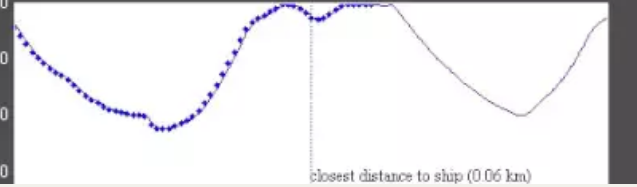
As the largest animals in the ocean, blue whales have not evolved defensive behaviors. New research by Stanford biologist Jeremy Goldbogen suggests this might explain why the whales are so prone to ship collisions.
GPS data from a blue whale shows the animal (blue dots) rising to the surface and then slowly dipping and narrowly missing a cargo ship (red dots) before diving deep once again.
For millions of years, blue whales have cruised the world’s oceans with hardly a care, their sheer size making them largely free from predator attacks. The downside to being the largest animals in history, however, is that the species was never pressured to evolve defensive behaviors.
Read full article at source: https://news.stanford.edu/2015/05/04/whales-ships-collisions-050415/
Gulf of Mexico ‘dead zone’ is the largest ever measured

June outlook foretold New Jersey-sized area of low oxygen
Scientists have determined this year’s Gulf of Mexico “dead zone,” an area of low oxygen that can kill fish and marine life, is 8,776 square miles, an area about the size of New Jersey. It is the largest measured since dead zone mapping began there in 1985.
Read full article at source: http://www.noaa.gov/media-release/gulf-of-mexico-dead-zone-is-largest-ever-measured

Ocean Acidification

Carbon dioxide in the water puts shelled animals at risk.
For tens of millions of years, Earth's oceans have maintained a relatively stable acidity level. It's within this steady environment that the rich and varied web of life in today's seas has arisen and flourished. But research shows that this ancient balance is being undone by a recent and rapid drop in surface pH that could have devastating global consequences.
Source: https://www.nationalgeographic.com/environment/oceans/critical-issues-ocean-acidification/

Corals eat plastic because we’ve made it tasty, study suggests

By Ben Guarino October 30
“Plastics may be inherently tasty,” said Austin Allen, a Duke marine science doctoral student. Allen and Seymour are the lead authors of a study just published in the journal Marine Pollution Bulletin. Along with Duke marine ecologist Daniel Rittschof, they demonstrated that corals respond to microplastic fragments as though they were food.
Plastic Garbage Patch Bigger Than Mexico Found in Pacific
Yet another floating mass of microscopic plastic has been discovered in the ocean, and it is mind-blowingly vast.
Water, water, everywhere—and most of it is filled with plastic.
A new discovery of a massive amount of plastic floating in the South Pacific is yet another piece of bad news in the fight against ocean plastic pollution. This patch was recently discovered by Captain Charles Moore, founder of the Algalita Research Foundation, a non-profit group dedicated to solving the issue of marine plastic pollution.
Source: https://news.nationalgeographic.com/2017/07/ocean-plastic-patch-south-pacific-spd/
Destruction of Habitat
Coral Bleaching
What Can We Do?
Some years ago I completed my scuba certification at one of the world’s most spectacular coral reefs, Australia’s Great Barrier Reef.


At that time, the reef was stunningly pristine, hosting an amazing variety of marine life. I was overwhelmed by the beautiful shapes and colors of the fish and coral and pledged then to continue diving throughout my life and to do what I can to preserve these beautiful places for generations to come. Needless to say, the devastation caused by coral bleaching in that area (I was certified near Port Douglass) breaks my heart. So, what can we do?
First, what is it? Coral bleaching occurs when coral expelsthe algae(zooxanthellae) that live in its tissue,depriving it of its major food source. If prolonged, this will eventually kill the coral.
Second, what’s causing it? There are many causes of coral bleaching including local factors like over fishing, excessive tourism, careless diving, pollution and storms and global factors like climate change and acidification. Scientists agree that the biggest single contributor, and perhaps the most difficult to control, is rising water temperatures caused by climate change.
Third, how important are reefs? Although I’m very clear on the value of coral reefs to me and other recreational divers, I was somewhat surprised to learn just how critical they are scientifically, socially and economically. Although they cover less than 1% of the earth’s surface, reefs are home to 25% of all knownmarine species and surpass even rainforests in their diversity1. Over 850 million people live within 100km of reefs2 and depend in large part on them for their sustenance. And, a recent attempt by the BBCto put a monetary value on the natural world's flora and fauna estimated that coral reefs are worth $9.9 trillion to the global economy3, or more than half the GDP of the United States. That number included the value of the fishing and tourism economies that coral reef support, as well as its ability to sequester carbon and mitigate storm damage.
So, what can we do to attempt to save our coral reefs? There are several points of action. First, we should do all that we can to minimize human impact on coral reefs. Second, we should do what we can to improve the resiliency of coral reefs…to enable them to better resist disturbances and to fully recover from them, since we know disturbances will happen. Third, we should pursue research and known techniques to restore damaged reefs.
Ways to minimize human impact on coral reefs on a large scale involves management, coordination and education. Marine Protected Areas (MPAs) (and networks of MPAs)that restrict human activity have proven very effective, particularly with respect to over fishing which can result in excessive fleshy algae growth. Individually, we must all do our share to (i) walk/bike/bus/electric car whenever possible; (ii) avoid red meat (as emissions from livestock is estimated at 15% of all emissions4,…); (iii) avoid the purchase of coral jewelry to eliminate consumer markets that encourage coral destruction; (iv) minimize the use of fertilizers/pesticides; (v) minimize the purchase and use of all plastic products; (vi) keep garbage out of our oceans; (vii) purchase sustainably farmed or fished seafood (see http://www.seafoodwatch.org/); and (viii) use appropriate sunscreen (see http://www2.padi.com/blog/2013/06/27/coral-reef-safe-sunscreen-for-scuba-diving/).
We should also support organizations doing great work to improve the resiliency of coral reefs and to restore damaged reefs. Some of those organizations include:
Aquatic Invasives
Invasive Lionfish
What’s for dinner? Hopefully it’s lionfish!
Bermuda has just hosted the “Eat Lionfish Chefs Throwdown,” a lionfish cooking competition organized by 11th Hour Racing whereby featured celebrity chefs from the host nations of each America’s Cup team, competed to create the best lionfish dish. Chef Chris Kenny, Necker Island’s Head Chef, won the prize, and all involved were winners in raising awareness.


Lionfish, specifically, Pterois miles and Pteroisvolitan, are native to the Indian Ocean, Southern and Western Pacific Oceans and the Red Sea, where they have sharks, cornetfish, grouper, large eels, frogfish and other scorpionfish as natural predators. However, in the Western Atlantic Ocean, Caribbean Sea and in the Gulf of Mexico where they do not have natural predators,invasive lionfish are an immense and growing problem. The first marine reef fish invasion of its kind, some say this is the worst man-made ecological disaster ever witnessed.1
The efficiency of invasive lionfish is impressive! They are literally out-breeding, out-eating and out-living native fish and other marine species.
BREEDING: A female lionfish becomes sexually mature at one year old and can release up to two million eggs per year. Many of those eggs become larvae and then juvenile lionfish in environments where they can live relatively free from environmental pressures.
EATING: Lionfish eat an amazing assortment of species including fish (the young of important commercial fish species such as snapper and grouper),invertebrates, mollusks, shrimp, crabs, juvenile octopus, squid, juvenile lobster and sea horses and in great quantities. Lionfish have been seen consuming 20 small fish in a 30-minute period and eating prey up to 2/3rds their size. Their stomachs can expand up to 30 times their normal size after a meal. These voracious appetites threaten both individual species as well as entire reef ecosystems. Some studies have shown that a single lionfish can reduce native marine creatures by 79% in its range within just 5 weeks. 2 Many of the species lionfish eat, such as grazers and cleaners, are ecologically critical to the health of the reef because they eat the algae that cover reefs, keeping the algae levels low enough that coral can survive and reproduce. Grazers include parrotfish, goatfish, wrasses, surgeonfish and tangs. Reefs are home to 25% of all known marine species and serve as shelter and protection to schools of many juvenile marine creatures.
Because they are so flexible, lionfish are seldom without food but, if conditions require, lionfish can live without food for 3 months and beyond and lose very little body mass as a result.
LIVING: Lionfish have impressive lifespans of 15-20 years and are spectacularly versatile in their ability to adapt to and thrive in different environments. For example, they have been spotted in water as shallow as 1’ deep and in water beyond 1,000’ deep. They live in oceans as well as brackish water estuaries and are able to tolerate water temperatures down to 50 degrees Fahrenheit. Sailors for the Sea http://sailorsforthesea.org, a nonprofit organization in Newport Rhode Island that unites boaters to protect the ocean, has witnessed lionfish in the cold water North Atlantic but claims “they don’t live long in our cooler waters and are unable to survive the tougher winters.”3 On top of all of this, lionfish appear biologically resistant to most diseases and parasites that affect native fish 4.
WHAT CAN BE DONE?
Obviously, many people are working on solutions to this devastating problem. A number of techniques have been tried, among them, hunting lionfish (spearguns, pole spears and Hawaiian slings have proven most effective), training native species to eat lionfish and zapping and collecting lionfish with robots.
Surprisingly, direct action by lionfish hunters is the most viable method for controlling lionfish currently in the very small areas divers can access. REEF.org5 is one of several organizations that sponsor lionfish derbies, in which hunters compete for the largest/smallest and most lionfish kills. It’s a nice way to raise awareness; the public is generally invited to participate, watching scoring, filleting and cooking demonstrations and tasting lionfish samples. And, the areas regularly maintained by such hunters have seen a demonstrable rebound of native fish over time.
Some groups have tried training sharks and groupers to eat invasive lionfish with limited success and unintended consequences. In one experiment, the grouper were clearly afraid of the lionfish and appeared to prefer starvation to eating lionfish. Also, because fish don’t train their offspring, each generation of fish would have to be trained to eat lionfish, making this method cost prohibitive. Lastly, once trained, sharks, in particular, thereafter equate lionfish with food, putting lionfish hunters in significant danger.
Robots In Service of the Environment (RISE) is a nonprofit organization attempting to solve the lionfish problem with robots that stun and then capture lionfish. One key benefit to using robots is that they can dive significantly deeper than humans and can potentially cover extensive areas. If successful, co-founder Colin Angle says, robots could capture enough lionfish to establish a new market in which “chefs can turn an environmental hazard into gourmet cuisine.” Angle wants lionfish hunting to become an online sport whereby users pay to hunt and capture fish by operating robots from an application. If it takes off, that would be an amazing way to both capture lionfish and raise awareness!

The only way to possibly solve this problem is ifscientists, technologists, fishermen, divers, chefsand consumers coordinate their efforts. So, back to dinner, I’m taking the pledge to improve my healthy choices6 and order/buy delicious lionfish whenever possible.
- https://lionfish.co
- MarkHixon et al (2009)
- http://sailorsforthesea.org/programs/ocean-watch/lionfish-invasion (Kimball et al. 2004)
- https://lionfish.co
- REEF also holds lionfish jewelry workshops which encourages yet another consumer market that promotes lionfish removal.
- Nutritionally lionfish have the highest concentration of omega-3 in their category, scoring above farmed tilapia, Bluefin tuna, red snapper and grouper. (Scientists from Roger Williams University, REEF, NOAA and the North Carolina Sea Grant (Morris et al, 2011) study detailing the nutritional benefits of lionfish consumption)

What are Microbeads and Why are They Illegal?
Next time you wash your face, think of the sludge that you've just dumped in the rivers and ocean. Not from your skin. From microbeads.
Microbeads are tiny bits of plastic found in exfoliating body washes and facial scrubs. Since their introduction in 1972, they have made their way into more than 100 personal care products sold by companies such as Procter & Gamble, Unilever, and L'Oréal.
Source: https://www.popsci.com/what-are-microbeads-and-why-are-they-illegal